
Do you have an open aquarium and feel like something is missing? Floating plants might just be exactly what you need.
Floating plants are an absolute blessing, especially if you don’t exactly have a green thumb.
Even if you struggle to keep hardy underwater plants like Java Fern alive, you’d have to try really hard to kill off most surface floaters.
The benefits are huge. For starters, they provide natural, dappled shade and a safe shelter for both adult fish and tiny fry.
They are also absolute powerhouses when it comes to stripping unwanted nutrients (like nitrates) right out of the water column—they do it so fast that submerged plants can only dream of keeping up.
Plus, they offer a great spawning medium for bubble-nesting fish and can create a thick enough mat to stop your fish from jumping out onto the floor.
Best of all? They reproduce like crazy. Once you buy a little tub or two, you’ll probably never need to buy them again. However, they can quickly turn into your worst nightmare if you end up with too many of them.
Here is everything you need to know to keep them thriving.
Open tank
While it’s not a strict rule for every single species out there, keeping a tight-fitting hood on your tank is usually a death sentence for floaters.
Have you ever noticed how hot, stuffy, and humid it gets right under the lid?
Unlike submerged plants, floaters draw their CO2 directly from the air. Under a tight lid, they simply suffocate and rot from the constant condensation dripping on their leaves.
On top of that, there’s the issue of physical space. Plants like Water Lettuce can grow quite tall and will quickly get cramped and burned under a low hood.
Open tanks are definitely the way to go here.
Surface Movement
Floating plants generally hate being swirled around like they’re in a washing machine.
If your filter outlet is blasting the surface, you’ll need to submerge it slightly and redirect the flow downwards to keep the top of the water calm.
You have to do this carefully, though. Reducing surface agitation also means reducing the oxygen exchange in the tank.
If you notice your fish gasping at the surface or breathing heavily after you make the change, put the filter back the way it was and try using a divider instead.
Dividers
You can easily create a calm “harbor” for your floating plants so they don’t get tossed around by the filter.
You can loop a piece of standard plastic airline tubing into a floating ring, or place a rigid plastic bracer across the surface to block the flow.
Honestly, anything that floats and is aquarium-safe will do the trick!
Fertilisers
Because they grow so incredibly fast, floating plants are very hungry for nutrients. A good, all-around liquid aquarium fertilizer (like TNC Complete, Seachem Flourish, or Tropica Specialised Nutrition) will do wonders for most of them.
Lighting
When it comes to lighting, it’s a bit of a balancing act. If your lights are too close to the water, they can literally scorch and burn the leaves.
Raising the light fixture spreads the illumination out better and prevents hot spots. But if you raise it too high, the plants won’t get enough energy to survive. It’s a game of trial and error to find that sweet spot.
Harvesting
These plants grow fast. Really fast. Under the right conditions, they can completely cover the surface of your tank in a week or two.
If you let them overgrow, the excess plants will get pushed underwater where they’ll clog your filter intakes or completely block out the light for the plants growing down at the bottom.
Make it a habit to get in there with a net once a week and scoop out the excess (just make sure you don’t accidentally net a curious fish!).
Crucial warning: NEVER dump aquarium plants into native waterways, ponds, or rivers. They are highly invasive and can carry tank pathogens that will decimate local ecosystems. Throw them in the compost or the trash.
Pests
Just like the roses in your garden, aquarium floaters can sometimes attract aphids. Whatever you do, DO NOT use regular bug killers or proprietary aphid sprays. Even a tiny drop of that stuff will wipe out your fish and shrimp.
The easiest fix? Just physically dunk the floating plants underwater every day for a few days. The aphids will wash off into the water, and your fish will gladly eat them as a free, high-protein snack.
6 Popular Floating Plants & How to Keep Them
Here are the specific requirements and pro-tips for the plants mentioned in the guide, plus two bonus aquarium favorites!
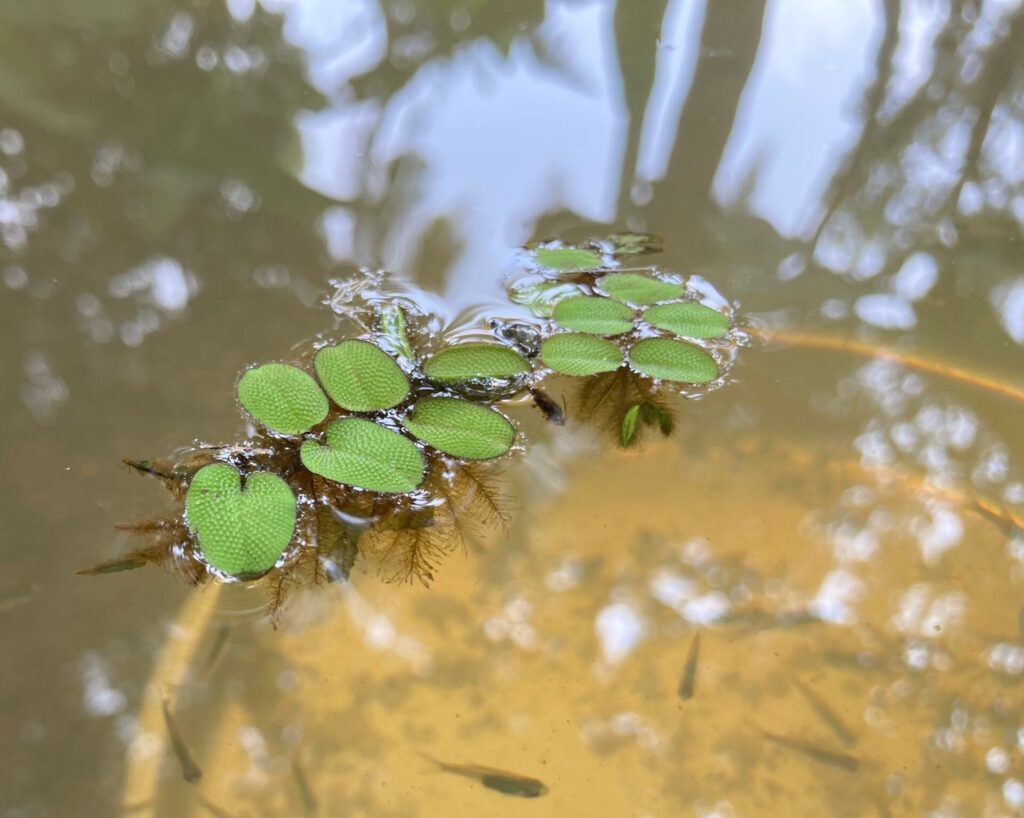
Water Spangles (Salvinia natans)
Water Parameters: Temperature: 20-28°C (68-82°F) | pH: 6.0-8.0
Lighting: Medium to High.
Requirements: Needs still water. The top of the leaves are covered in tiny, water-repellent hairs. If these get constantly splashed or submerged, the plant will rot.
Care Tips: Keep an eye on the leaf color. If they start turning pale yellow or growth slows down dramatically, it’s a clear warning sign that your tank is lacking nutrients (usually nitrates).
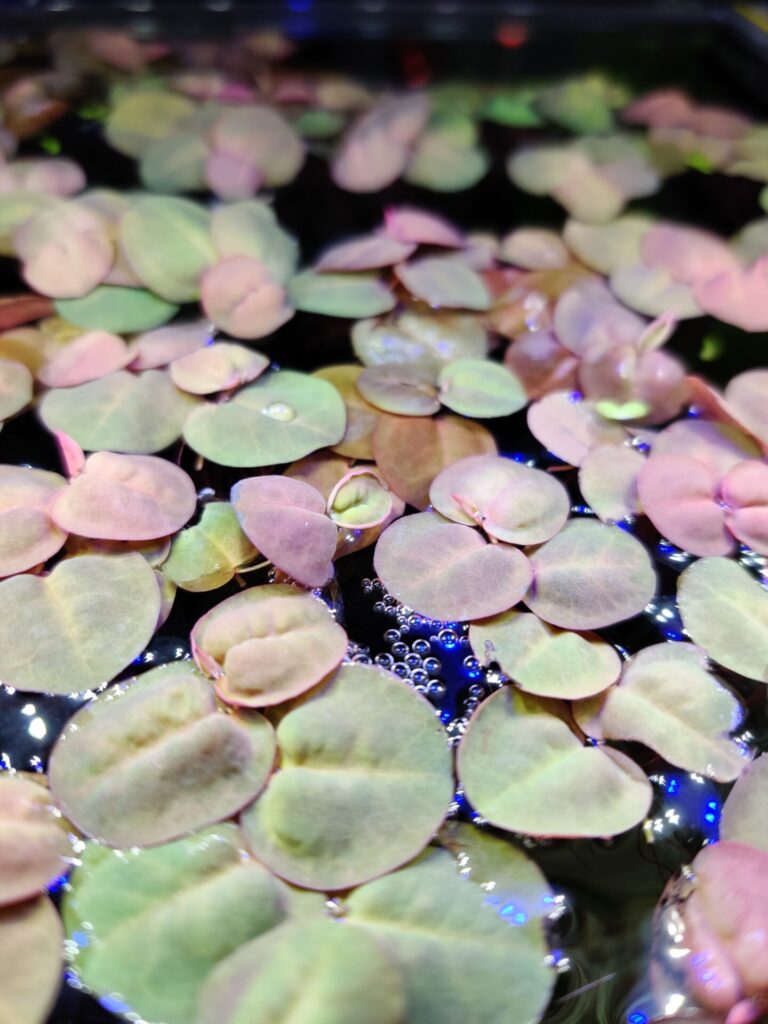
Red Root Floater (Phyllanthus fluitans)
Water Parameters: Temperature: 21-28°C (70-82°F) | pH: 6.5-7.5
Lighting: High.
Requirements: Out of all the floaters, this one hates surface movement the most. It absolutely needs iron-rich fertilizers to thrive. It also tends to do a bit better in slightly harder water.
Care Tips: If you want that deep, gorgeous crimson red color on the leaves and roots, you must hit them with high-intensity light and regular iron dosing. Under lower light, they will just stay green.
Duckweed (Lemna spp.)
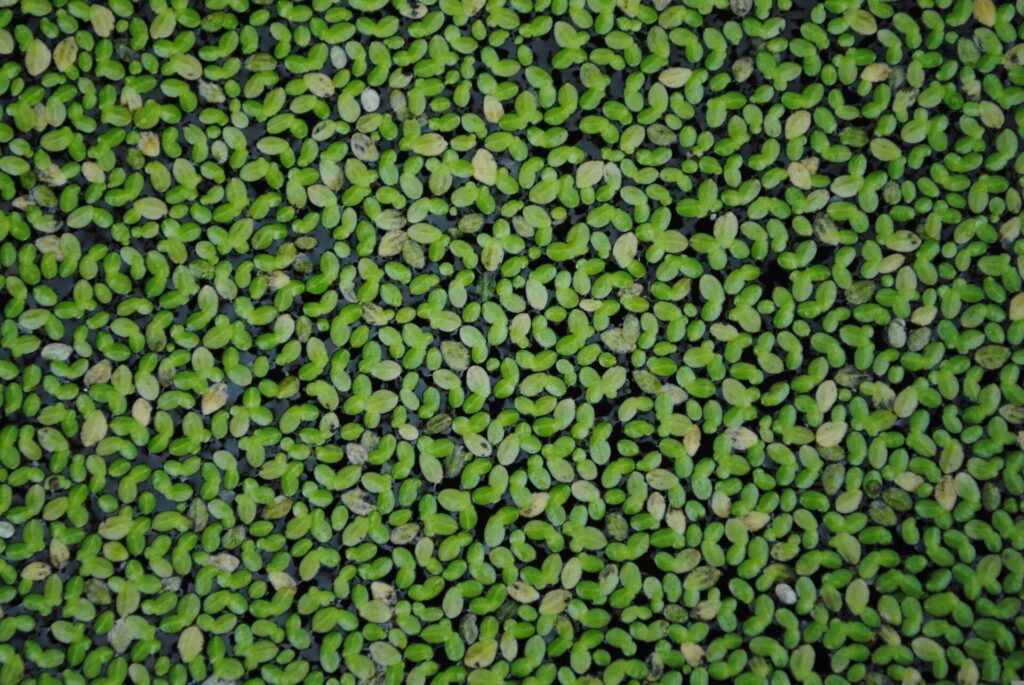
Water Parameters: Temperature: 10-30°C (50-86°F) | pH: 6.0-8.0
Lighting: Low to High (it’s not picky at all).
Requirements: Almost none. It survives in nearly any condition.
Care Tips: It grows so unbelievably fast that the aquarium community often jokes it’s tank “herpes”. Once you have it, it’s hard to get rid of. However, it is an absolute champion at sucking up toxic nitrates. You can usually get it for free from a local pond or a friend’s tank!
Water Lettuce (Pistia stratiotes)
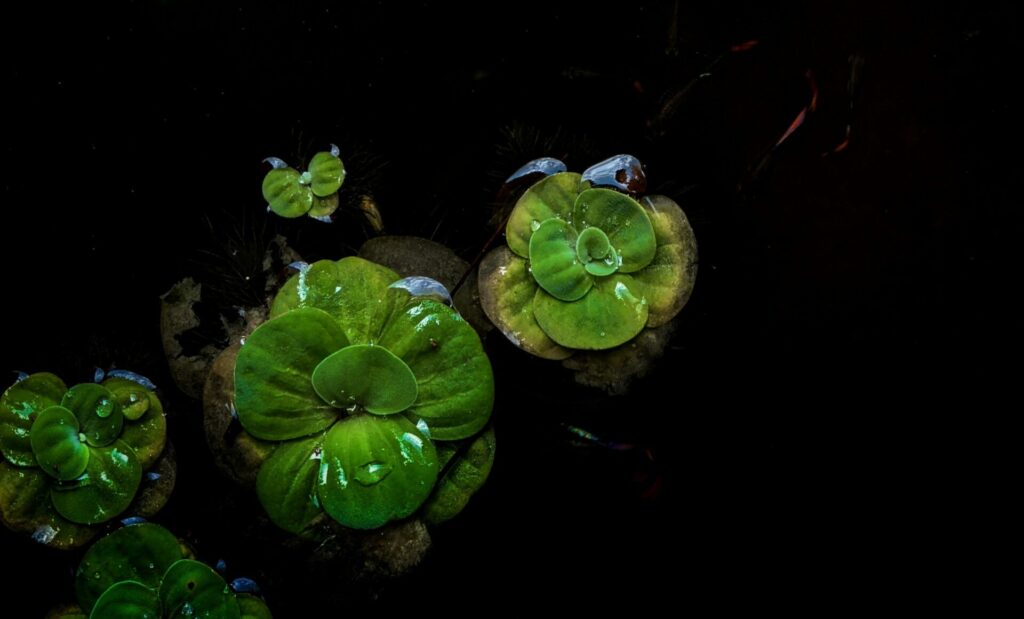
Water Parameters: Temperature: 21-30°C (70-86°F) | pH: 6.5-7.5
Lighting: Medium to High.
Requirements: Needs open air above the tank. It grows in a large rosette (like a cabbage) and its fuzzy leaves will quickly rot if condensation drips on them from a glass lid.
Care Tips: The root systems on these can grow incredibly long and bushy (sometimes reaching the substrate!). They look amazing in deep tanks and offer the absolute best hiding spots for baby shrimp and fry.
Amazon Frogbit (Limnobium laevigatum)
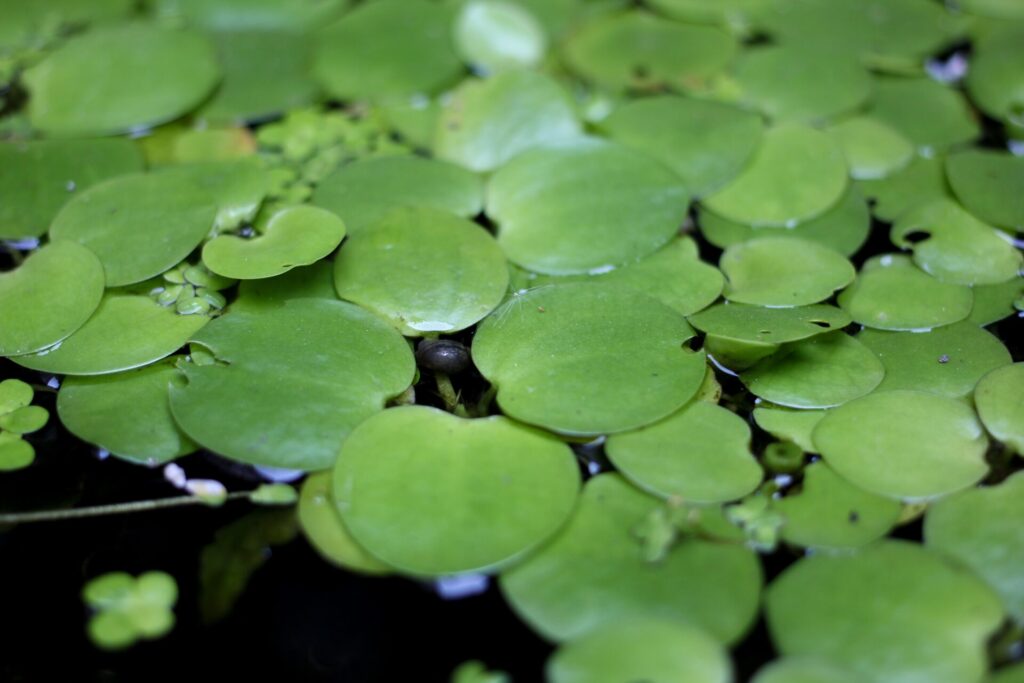
Water Parameters: Temperature: 18-28°C (64-82°F) | pH: 6.0-7.5
Lighting: Medium.
Requirements: Likes a gentle flow, but keep the tops of the leaves dry. Needs liquid fertilization if the tank has a low bioload (few fish).
Care Tips: Snails absolutely love eating the spongy underside of Frogbit leaves. If you see tiny holes appearing, your snails are likely munching on them. It features beautiful, long, fuzzy roots that fish love to swim through.
Crystalwort (Riccia fluitans)
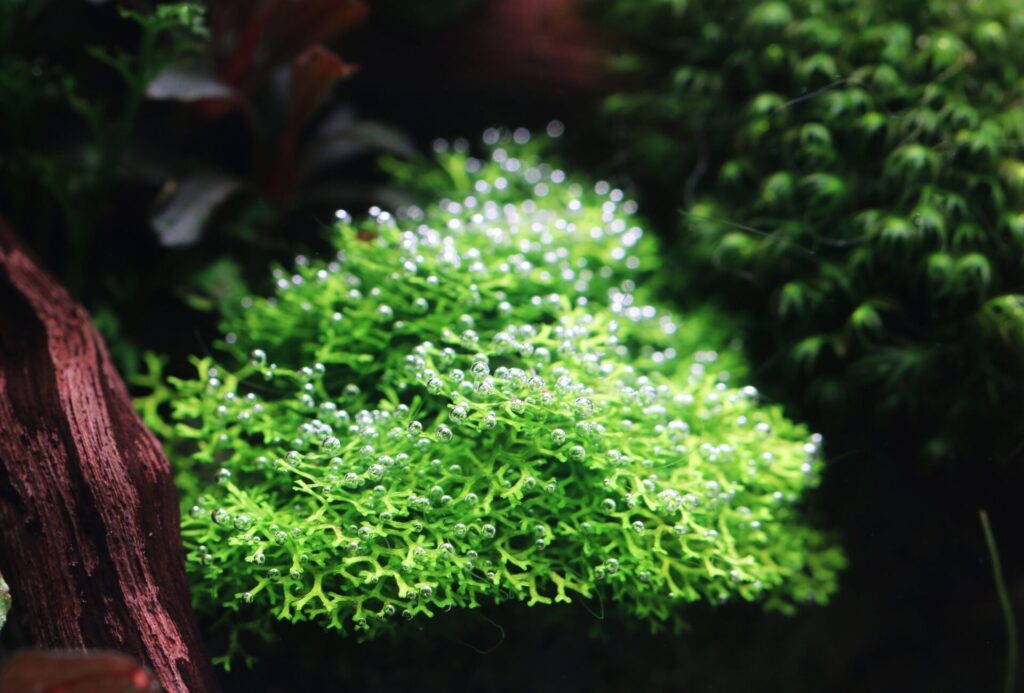
Water Parameters: Temperature: 15–28°C (59–82°F) | pH: 6.0–7.5 Lighting: High.
Requirements: Intense light and CO2 supplementation for optimal growth.
Care Tips: When provided with ample CO2 and light, it performs its signature “pearling,” where thousands of tiny oxygen bubbles settle on its tips, making the plant appear as if it were encrusted with diamonds. While it naturally floats, it can be artfully anchored to hardscape using fine mesh or line to create a vibrant, emerald-green carpet that adds a sense of luxury and depth to any aquascape.
In Conclusion
Adding floating plants to your open tank is honestly a no-brainer. Not only do they bring a stunning, natural aesthetic to your setup, but they also act as a biological powerhouse—keeping your water crystal clear, starving out algae, and providing a stress-free haven for your fish.
Sure, they demand a little bit of regular maintenance (mostly just scooping out the sheer volume of new growth so they don’t block out the light!), but the incredible benefits they bring to your tank’s ecosystem make that tiny bit of effort completely worth it.
Whether you are a total beginner or a seasoned fishkeeper, surface plants are incredibly forgiving and rewarding.
Grab a handful, toss them in, and watch your underwater world transform!


